Heat Pump Operation Fundamentals
As professionals in home comfort, we often see people searching for efficient heating and cooling solutions. Many turn to heat pumps, a technology that has really changed the game for how we manage indoor temperatures. I have personally seen how these systems can provide consistent comfort while also helping reduce energy bills.
Heat pump operation fundamentals revolve around a clever principle: moving heat instead of generating it. This makes them incredibly versatile, working hard to keep your home warm in the winter and cool in the summer. It is a dual-purpose system that many homeowners find appealing.
This discussion will walk through how these remarkable systems function. We will explore the core concepts that allow a heat pump to deliver year-round comfort. Understanding these basics helps you appreciate the technology and manage your home’s climate effectively.
Understanding What a Heat Pump Is
A heat pump is an electrical system that provides both heating and cooling for your home. It works by transferring heat from one place to another. During colder months, it pulls heat from the outside air or ground and moves it inside. In warmer months, it reverses this process, taking heat from inside your home and releasing it outdoors.
Unlike a furnace that burns fuel to create heat or an air conditioner that only cools, a heat pump simply moves existing heat. This fundamental difference is why heat pumps are often praised for their energy efficiency. They do not generate heat directly, so they use less energy.
I have explained to many homeowners that thinking of a heat pump like a refrigerator helps grasp its concept. A refrigerator moves heat from inside the cool compartment to the warm kitchen. A heat pump does the same for your entire home, just on a larger scale. It is a highly efficient way to maintain a comfortable indoor environment throughout the year.
There are a few main types of heat pumps. Air-source heat pumps are the most common, and they extract heat from the outside air. Geothermal heat pumps use the stable temperatures found deep underground. Both types rely on the same principle of heat transfer, but they draw heat from different sources. This adaptability makes them a smart choice for many climates.
The Refrigeration Cycle at Work
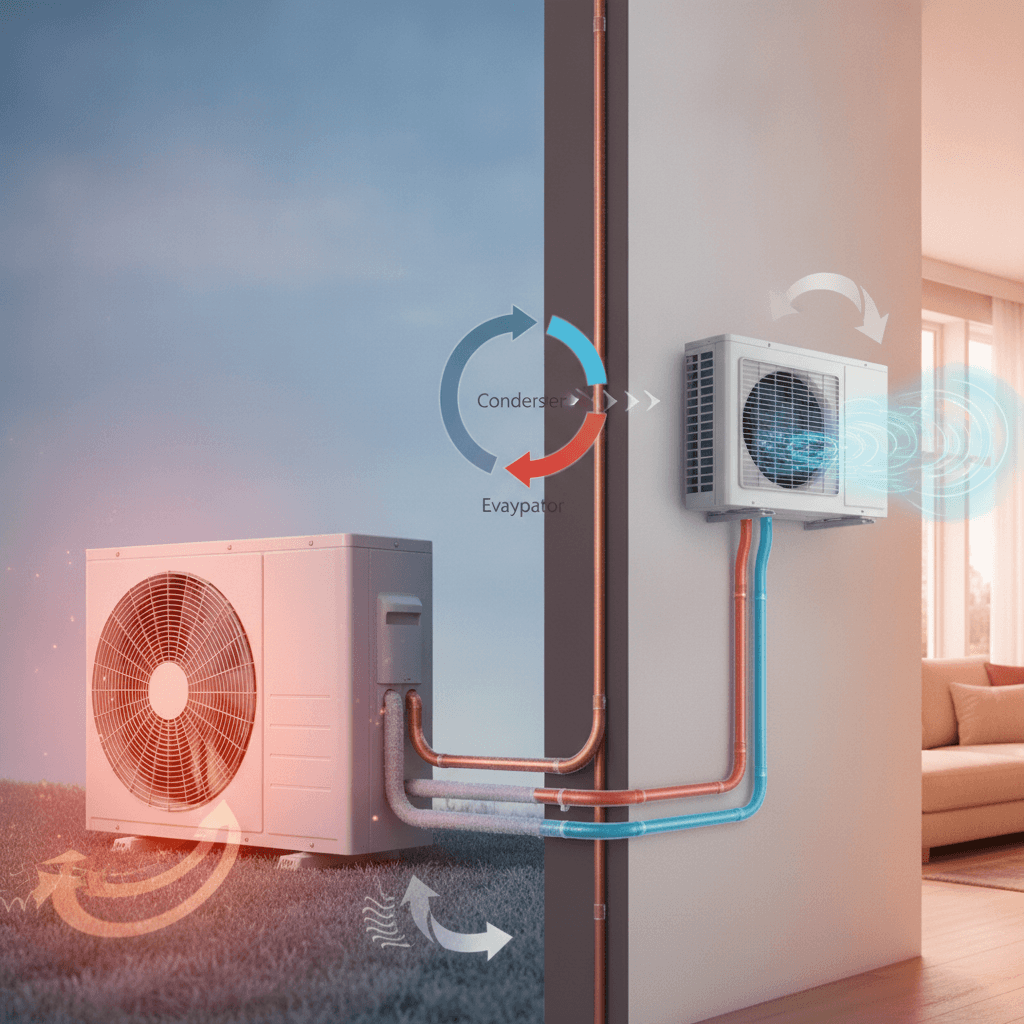
The core of heat pump operation fundamentals lies in the refrigeration cycle. This is a continuous process that involves a special fluid called refrigerant. This refrigerant circulates through the heat pump components, changing between liquid and gas states. These phase changes allow it to absorb and release heat very efficiently.
Four main components orchestrate this cycle. There is a compressor, which pumps the refrigerant and increases its temperature and pressure. Then, we have the condenser coil, where heat is released. The expansion valve lowers the refrigerant’s pressure and temperature. Finally, the evaporator coil is where the refrigerant absorbs heat.
This cycle allows the heat pump to either warm or cool your home. The direction of the refrigerant flow determines whether the system is in heating or cooling mode. It is a clever system designed to offer comfort in any season.
The entire process is sealed so the refrigerant never escapes into your home. This contained loop is what makes the heat pump a reliable and environmentally friendly option for climate control. I always emphasize the importance of this closed system to our clients, ensuring them of its safe operation.
Heating Mode Explained
When your heat pump is in heating mode, it is working to bring warmth into your home. The outdoor unit absorbs heat from the surrounding air. Even on chilly days, there is always some heat energy available in the air outside.
The cold liquid refrigerant flows through the outdoor evaporator coil. Here, it absorbs heat from the outdoor air and turns into a warm gas. The compressor then steps in, increasing the temperature and pressure of this gas. This highly pressurized, hot gas then travels to the indoor condenser coil.
Inside your home, the hot refrigerant gas releases its heat into your indoor air. This warmed air is then circulated throughout your house. As the refrigerant cools down from releasing its heat, it condenses back into a liquid state. It then passes through the expansion valve, which drops its pressure and temperature, preparing it to absorb more heat from outside and restart the cycle.
Cooling Mode Explained
In cooling mode, the heat pump reverses its function to remove heat from your living space. The indoor evaporator coil takes in heat from your home’s air. The system is essentially moving unwanted heat out of your house.
The warm indoor air passes over the indoor evaporator coil, and the liquid refrigerant inside this coil absorbs the heat. As it absorbs heat, the refrigerant changes into a cool gas. This gas then moves to the outdoor unit. The compressor increases the pressure and temperature of this gas, sending it to the outdoor condenser coil.
Outside, the hot, pressurized refrigerant gas releases its heat into the cooler outdoor air. As it sheds its heat, the refrigerant condenses back into a liquid. It then goes through the expansion valve, reducing its pressure and temperature. This chilled liquid refrigerant then returns to the indoor evaporator coil to begin absorbing heat from your home once more, keeping your interior cool and comfortable.
Key Components and Their Roles
Every part of a heat pump system plays a crucial role in its overall operation. Understanding these components helps you appreciate the engineering behind your home’s comfort. We rely on each piece working together seamlessly.
The most visible parts are the outdoor unit and the indoor unit. The outdoor unit houses the compressor and one of the coils. The indoor unit, often an air handler, contains the other coil and a fan. These two units are connected by refrigerant lines that allow the heat transfer process to occur.
The compressor is the heart of the system. It pressurizes the refrigerant, which is vital for changing its temperature and state. Without a functioning compressor, the heat pump cannot effectively move heat. This component does a lot of heavy lifting.
The reversing valve is another essential piece. It is what allows the heat pump to switch between heating and cooling modes. This valve changes the direction of the refrigerant flow. The thermostat acts as the brain, allowing you to set your desired temperature and control the heat pump’s operation. It tells the system when to turn on and off.
The refrigerant itself is the medium that carries the heat. It absorbs and releases thermal energy as it circulates and changes state. All these parts work in harmony to maintain your home’s climate. I make sure our customers understand these components so they can better interact with their systems.
Energy Efficiency and Environmental Benefits
One of the most compelling aspects of heat pump operation fundamentals is their outstanding energy efficiency. Because these systems move heat rather than creating it through combustion, they consume significantly less energy than traditional heating methods. This translates directly into lower utility bills for homeowners.
The efficiency of a heat pump is measured by its Coefficient of Performance or COP for heating, and its Seasonal Energy Efficiency Ratio or SEER for cooling. A higher COP or SEER rating means a more efficient unit. Modern heat pumps often achieve COPs of 3 or higher, meaning they deliver three units of heat energy for every one unit of electrical energy consumed. This level of efficiency is hard for conventional systems to match.
Beyond the cost savings, heat pumps offer substantial environmental benefits. They produce zero on-site carbon emissions since they do not burn fossil fuels. This helps reduce your home’s overall carbon footprint. Many people are looking for ways to make their homes more eco-friendly, and a heat pump is a big step in that direction.
We see more and more customers prioritizing sustainable options. Choosing a heat pump aligns with those values, providing comfort while also caring for the planet. It is a win-win for both your wallet and the environment because of this smart approach to energy use.
Common Operational Considerations
Understanding heat pump operation fundamentals also means knowing about some specific behaviors. These are not malfunctions but rather normal functions of the system, designed to maintain efficiency and performance. Familiarity with these helps manage expectations.
One common feature is the defrost cycle. This occurs periodically during cold weather to prevent ice buildup on the outdoor coil. Another important aspect is the use of auxiliary heat, which can kick in during very low temperatures. Properly setting your thermostat is also key to maximizing heat pump effectiveness.
I often discuss these points with clients to ensure they understand their system fully. These considerations are part of everyday heat pump use. Knowing what to expect keeps surprises to a minimum.
The Defrost Cycle
In colder climates, the outdoor coil of a heat pump can get frosty or even ice over. This happens because the coil is absorbing heat from the cold outdoor air, which can cause moisture in the air to freeze on its surface. When ice builds up, it reduces the system’s ability to transfer heat efficiently.
So, a heat pump automatically enters a defrost cycle to melt this ice. During defrost, the system temporarily switches to cooling mode for a short period, typically 5 to 15 minutes. It circulates warm refrigerant through the outdoor coil to melt the ice. At the same time, the outdoor fan often turns off to help the coil warm up faster.
You might notice a bit of steam coming from the outdoor unit during this time, and the indoor unit might blow cooler air or temporarily shut off. This is completely normal and not a sign of trouble. The defrost cycle is essential for maintaining efficient operation in winter conditions. It is a smart way the system handles cold weather challenges.
When Auxiliary Heat Kicks In
Heat pumps are highly efficient, but they become less efficient as outdoor temperatures drop significantly. There is a point, often around 35-40 degrees Fahrenheit, where the heat pump might struggle to extract enough heat from the outside air to comfortably warm your home. This is where auxiliary heat comes into play.
Auxiliary heat, also known as supplemental or emergency heat, is usually provided by electric resistance coils within the indoor unit. These coils are similar to those in a toaster or an electric furnace. They generate heat directly, which is less efficient than heat pump operation, but they provide a boost of warmth when needed.
Your heat pump’s thermostat is designed to activate the auxiliary heat automatically when the outdoor temperature falls below a certain set point or when the heat pump cannot keep up with the heating demand. You might see an “Aux Heat” or “Emergency Heat” indicator on your thermostat. While it ensures your home stays warm, using auxiliary heat means higher energy consumption because it takes more electricity to produce heat directly. We advise homeowners to only use auxiliary heat when truly necessary, because understanding its function helps optimize energy usage.
Maintaining Optimal Heat Pump Performance
Regular maintenance is crucial for ensuring your heat pump operates at peak efficiency and has a long lifespan. Just like any complex mechanical system, it needs consistent attention to perform its best. Neglecting maintenance can lead to reduced efficiency, higher energy bills, and costly repairs down the road.
I always tell homeowners to prioritize a few key tasks. Changing your air filter regularly is probably the easiest and most important thing you can do. A clogged filter restricts airflow, making your heat pump work harder and use more energy. I recommend checking it monthly and replacing it every one to three months, depending on usage and pet ownership.
Annual professional tune-ups are also vital. A certified HVAC technician can inspect the system, clean coils, check refrigerant levels, and ensure all components are working correctly. They can spot potential issues before they become major problems, saving you money and inconvenience. This kind of proactive care is invaluable.
Keeping the outdoor unit clear of debris like leaves, grass clippings, and snow is another simple but effective maintenance tip. Blockages can impede airflow and reduce efficiency. Make sure there is at least two feet of clear space around the unit. For larger issues and when choosing a professional, it is important to find a reliable and skilled team. You can find excellent advice on this topic by learning Berkeys Plumbing, Air Conditioning and Electric and similar reputable sources. Proper care helps your heat pump run smoothly and efficiently for years.
Conclusion: Embracing Modern Home Comfort
We have covered the heat pump operation fundamentals, from understanding their basic concept of heat transfer to the intricate dance of the refrigeration cycle. These systems stand out as remarkably efficient and versatile solutions for year-round home comfort. They do not just cool our homes in summer and warm them in winter; they do so with a keen eye on energy consumption, helping to ease the strain on both our wallets and the environment.
I believe that knowing how your heat pump works empowers you as a homeowner. It allows you to make informed decisions about its use, recognize normal operational behaviors like the defrost cycle, and understand the role of auxiliary heat. This knowledge also highlights the importance of regular maintenance, like changing filters and scheduling annual check-ups, ensuring your system continues to deliver optimal performance and longevity.
The shift towards more sustainable and efficient home systems is clear, and heat pumps are at the forefront of this movement. They offer a powerful combination of comfort, cost savings, and environmental responsibility. So, whether you are considering installing a new system or looking to get the most out of your current one, I encourage you to embrace the intelligence behind heat pump technology and commit to its proper care and operation. It is a decision that truly pays off in comfort and peace of mind.